CASE FILE / PARK-COMMAND-CENTER · ANONYMISED
01 / Background and challenge
The park covers about 4.2 square kilometres. Video, access control and public address were built in three phases, each with a different brand and interface.
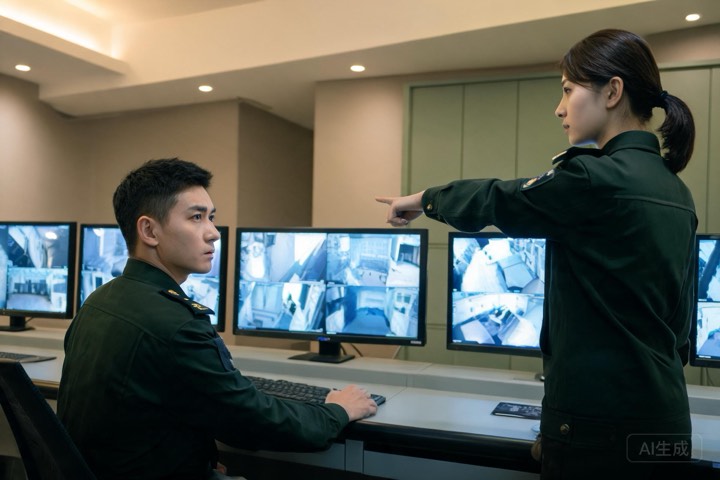
The duty room has two workstations and a single officer on the night shift. When an access alarm sounded, the officer had to phone for confirmation and then switch screens manually.
02 / Approach
The event flow was rebuilt around the duty desk: video, access, visitor, fire and public address events merged into one time-ordered queue and dispatched by severity.
Existing cameras and card readers were kept. New aggregation gateways and an event middleware layer limited the work to the server room and the duty room.
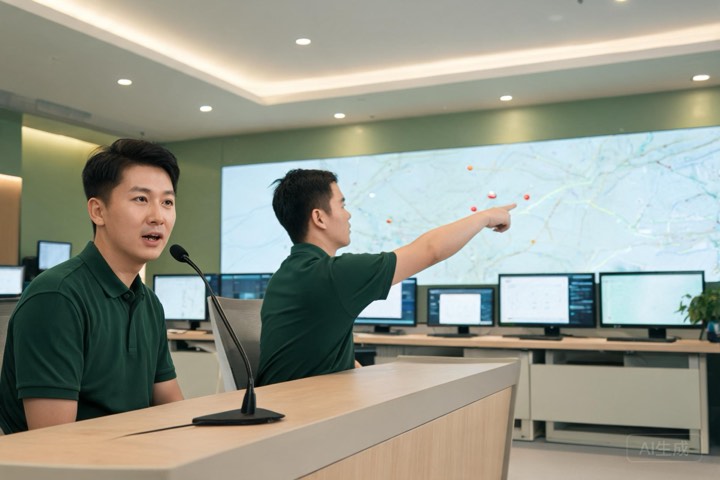
The large screen was given three preset layouts — routine patrol, event support and emergency response — switchable with one action.
03 / Implementation
The first cutover covered non-production areas and perimeter roads; office and dormitory buildings followed after two weeks of validation.
Each cutover ran on Sunday between 06:00 and 12:00. The old client kept read-only access so operators could fall back to the previous system.
Acceptance involved the park office, property management and security, with one live access alarm and one fire alarm drill.
04 / Results and evidence
Three alarm types are now handled in one queue, cutting average handling time by 35%.
The night shift moved from three people to two, and handover records moved from paper to an electronic log.
Scenario-based screen layouts reduce the number of system switches during a shift.